Polycarp: A Faithful Witness in the Line of the Apostles
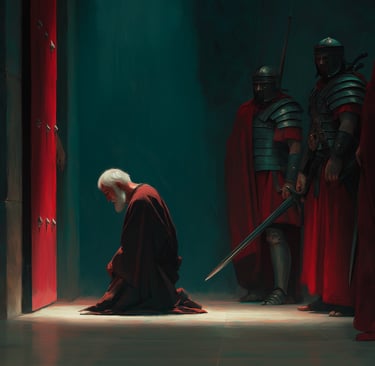
Polycarp, a disciple of the Apostle John and bishop of Smyrna, remained faithful to Christ unto death—praying peacefully before his arrest, refusing to deny his Savior, and courageously giving his life as a martyr.
REVIVAL HISTORY

Polycarp: A Faithful Witness in the Line of the Apostles
When we speak of the early church, names like Peter, Paul, and John quickly come to mind. Yet standing among the giant pillars of the Apostolic age is another figure whose courage, humility, and steadfast love for Christ continues to resonate through history — Polycarp of Smyrna.
A Disciple of the Apostle John
Polycarp is uniquely important because he didn’t learn Christianity from a distant source or generations removed from Jesus. Church historians record that Polycarp was personally discipled by the Apostle John — the beloved disciple who walked with Jesus, leaned on His chest at the Last Supper, and received the Revelation on Patmos.
Through John, Polycarp heard firsthand accounts of Jesus’ teachings, miracles, passion, death, and resurrection. He became a living bridge between those who saw Jesus with their eyes and the next generation of believers who received the Gospel through their testimony.
Irenaeus, one of Polycarp’s own students, wrote passionately about hearing Polycarp repeat the teachings of John and retell encounters with the Lord — proof that the message of Christ was not legend, but living memory.
Bishop of Smyrna: A Faithful Shepherd
Polycarp eventually became the bishop of Smyrna, a city honored in Revelation 2:8–11 as a church faithful under persecution. As their spiritual father, he guided the believers in doctrine, prayer, and devotion to Christ. His writings emphasized love, endurance, and holiness, and he fought against false teachers who sought to corrupt the faith.
He believed that faith in Christ was not merely professed — it was lived, and if necessary, died for.
The Arrest: Calm in the Face of Death
Polycarp’s martyrdom is one of the most detailed and inspiring accounts we possess from early Christianity. At around 86 years old, authorities sought to arrest him during Emperor Marcus Aurelius’ persecution of Christians.
Historical records say that when Roman soldiers arrived to seize him, Polycarp did not flee or resist. Instead, he welcomed them, offered them food, and requested time to pray. The soldiers — struck by his peace and dignity — wondered why such a gentle old man was condemned.
But for Polycarp, obedience to Christ meant embracing whatever the Lord allowed.
“Eighty and Six Years I Have Served Him…”
Brought into the stadium before the crowds, Polycarp was urged to deny Christ and swear loyalty to Caesar. The proconsul begged him:
“Swear by the genius of Caesar and curse Christ, and you shall live.”
Polycarp replied with words that echo through eternity:
“Eighty and six years I have served Him,
and He has never done me wrong.
How then can I blaspheme my King who saved me?”
These were not the words of a scholar defending an opinion — they were the confession of a shepherd who knew his Shepherd’s voice.
The Fire that Could Not Burn Him
Polycarp was sentenced to death by burning. Witnesses say the flames refused to consume him, forming a protective arch around his body. Seeing this, soldiers ended his life with a dagger. The church preserved his bones as precious relics — not idols, but reminders of a man who finished well.
Why Polycarp Still Matters Today
Polycarp stands as an enduring reminder that:
The faith we possess was handed down personally and faithfully
through real people, not myth or imagination.Christian discipleship produces courage, even in ordinary, elderly saints.
Faithfulness to Christ is worth more than life itself.
Polycarp’s story calls us to examine our own hearts:
What would it take for us to deny Christ?
Do we live with the same quiet boldness?
Will future generations hear Jesus through us as Polycarp did through John?
A Final Encouragement
Polycarp did not see himself as a hero — only as a servant of a faithful King. His life continues to preach a message the modern church desperately needs:
“Be faithful unto death, and I will give you the crown of life.”
— Revelation 2:10
May his example inspire us to stand firm, endure hardship, and love Jesus with the same unwavering devotion.